
Why Restaurant Visual Strategy Is a Revenue Decision, Not a Creative One
Most restaurant owners think about photography the way they think about interior paint, something you address once, something that makes the place look better, something you revisit when it starts to feel dated.
That framing is costing them money.
Visual strategy isn't a finishing touch on a well-run restaurant operation. It's a revenue variable, one that affects how much customers are willing to pay, how often they return, how well your paid media performs, and whether your brand commands a market position or simply occupies one.
The operators who understand this don't ask whether they can afford strong visual content. They ask what it's costing them not to have it. That's a different question, and it leads to different decisions.
What Is Visual Strategy — Beyond Photos?
Before the revenue conversation can happen, the definition needs to be accurate.
Visual strategy is not a collection of images. It's not an Instagram aesthetic. It's not what happens when you hire a photographer for a few hours and post the results.
Visual strategy is the systematic expression of your brand's positioning, communicated consistently across every platform where a potential guest encounters your business. It includes the photography, yes — but also the sequencing, the platform-specific calibration, the asset planning, the story those images tell collectively, and how all of it aligns with the specific audience you're trying to attract and retain.
Done correctly, it functions as a system. Every image reinforces the same message about quality, price point, and experience. A guest who finds you through a paid ad, then visits your website, then checks your Instagram before making a reservation, should encounter a coherent identity at each step — not three different versions of the same restaurant.
That coherence is not accidental. It's engineered. And the restaurants that have it hold a structural advantage over those that don't, regardless of how good the food is.
🔧Recommended Tool: Later— Social Media Scheduling & Visual Planning
The Revenue Levers Visual Strategy Influences
Perceived Value and Pricing Power
Price sensitivity is not fixed. It's influenced heavily by perception — and perception is shaped by visual signals long before a guest orders anything.
Research in consumer behavior consistently shows that people form quality judgments within seconds of encountering a brand, largely based on visual cues. In hospitality, this means that before a guest reads your menu, before they speak to a server, they've already decided — at least provisionally — what the meal is worth.
Strong visual strategy raises that anchor. When a restaurant's photography communicates craft, intentionality, and quality, guests arrive with a higher perceived value ceiling. They're less likely to filter by price and more likely to order at higher ticket values. They're more forgiving of premium pricing because the expectation was set correctly before they walked in.
The inverse is also true. Weak or inconsistent visuals anchor value low. And once that anchor is set, discounting becomes almost reflexive — a way to overcome a perception problem that the operator may not even know they have.
Conversion — Online and In-Person
The modern restaurant discovery path runs almost entirely through visual content. Google listings, delivery platforms, social feeds, paid ads, and websites are all primarily visual environments. In each of these spaces, your photography is doing either active work or passive damage.
On delivery platforms, items with professional photography consistently outperform those without. The reason is simple: customers can't taste or smell before they order. Photography is the proxy for the product, and its quality directly influences click-through and selection rates.
On paid social, creative is the primary performance variable — not audience targeting, not budget, not copy. An operator running ads with strong visual assets against the same audience as a competitor with weak visuals is not competing on equal terms. They're running a different game.
Website booking behavior follows the same pattern. A site with intentional photography, clear visual hierarchy, and imagery that matches the actual experience reduces the friction between discovery and reservation. It also reduces the kind of expectation mismatch that produces one-visit guests instead of regulars.
🔧Recommended Tool: Owner.com — Online Ordering & Marketing for Restaurants
Menu Engineering and Ordering Behavior
Visual strategy extends to the menu itself, and this is a lever most operators underutilize.
Menu engineering — the practice of designing your menu to promote high-margin, high-preference items — is well-established in hospitality operations. What's less often discussed is how visual emphasis within a menu influences ordering behavior just as significantly as placement or description.
When high-margin items are supported by strong photography — whether on a printed menu insert, a digital menu board, a QR code destination, or a social post — they get ordered more often. Not because guests are being manipulated, but because the visual creates desire that the written description alone cannot generate.
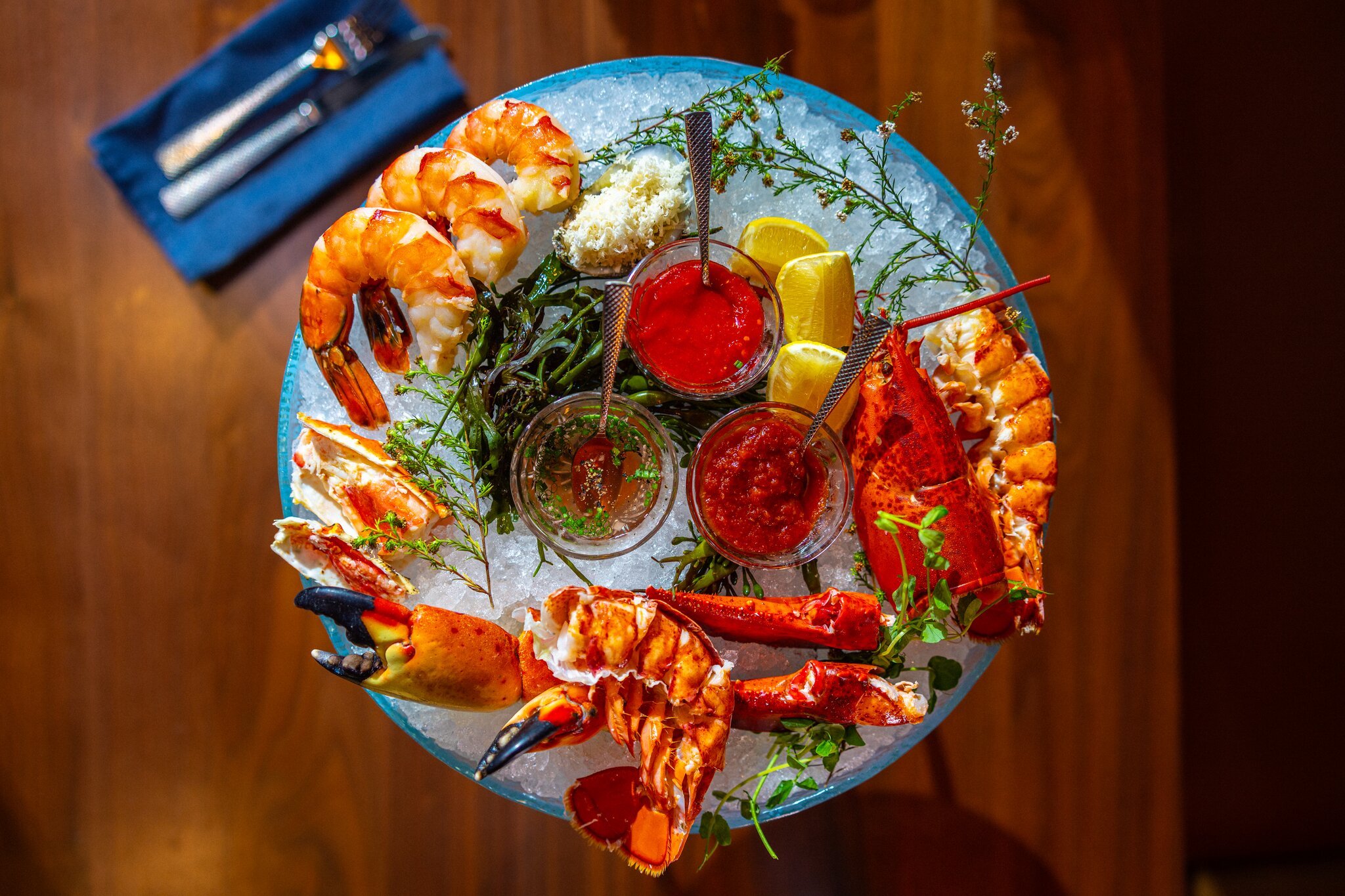
An oyster dish described in text is a line item. The same dish photographed with intention is an experience worth ordering. The margin on that item doesn't change. The rate at which it gets ordered does.
🔧 Recommended Tool: Uniqode — Trackable QR Codes for Restaurant Menus
Brand Consistency and Repeat Traffic
Loyalty in restaurants is built on more than good food. It's built on familiarity, predictability, and the emotional relationship a guest develops with a brand over time.
Visual consistency is a significant part of how that relationship gets reinforced between visits. When a guest follows your Instagram, receives your email newsletter, or encounters your brand in their feed, the visual coherence of what they see signals that the restaurant they loved is still the restaurant they'll find when they return. It reduces re-decision friction. It keeps you on the shortlist.
Brands that communicate inconsistently — even when the physical experience is excellent — are harder to stay loyal to because they're harder to stay oriented to. Guests don't consciously track visual inconsistency. But they feel it as vagueness, and vagueness doesn't drive reservations.
Expansion and Investor Confidence
For operators planning growth — additional locations, franchise development, investment rounds, or institutional partnerships — visual strategy has a specific function that goes beyond customer-facing marketing.
A polished, consistent visual system signals operational maturity. It tells a prospective investor or partner that the brand has been thought through, that the identity is scalable, and that the operator understands what the brand is and who it's for.
A restaurant without a coherent visual identity communicates the opposite, regardless of its financial performance. It suggests that brand-building has been reactive rather than strategic — which raises questions about how the rest of the operation has been run.
In expansion conversations, first impressions still matter. And they're almost always visual.
Real-World Scenarios
Scenario One: Same Market, Different Positioning Outcomes
Two independent restaurants open within six months of each other in the same urban neighborhood. Similar cuisine category. Similar price point. Similar square footage and seat count. Restaurant A invests in a brand identity and visual system from the beginning — a website that communicates the experience accurately, consistent photography across their social platforms, and imagery built for use in local advertising. Restaurant B launches with whatever photography the owner could pull together quickly — some phone shots, a few images from opening night, and a grid that reflects the chaos of early operations rather than a considered brand. Eighteen months later, Restaurant A is at or near capacity on weekends and has built the kind of social following that generates organic word-of-mouth. Restaurant B is running regular specials to drive traffic and has quietly dropped their weekend tasting menu because the perceived value wasn't landing with guests. The food quality gap between them, by most accounts, is narrow. The brand perception gap is significant. And that gap has compounded over time.
Scenario Two: Visual Overhaul and Booking Rate Recovery
A mid-market restaurant group with three locations was running consistent monthly covers but noticed flat growth and declining engagement on paid social. Their photography was two years old and no longer reflected the updated menu or a recent interior renovation. After a full visual refresh — new photography across all three locations, recalibrated social content, and updated imagery in their paid campaigns — they saw meaningful improvement in both ad performance and direct reservation volume within 60 days. The product hadn't changed. The presentation had. The practical lesson: visual content has a shelf life, and operating past it has real costs that rarely show up as a line item but show up clearly in performance data.
Scenario Three: Menu Photography and Average Ticket Movement
A single-location restaurant introduced photography for their highest-margin items — four dishes that accounted for a disproportionate share of gross profit when ordered. The photography was placed on their QR code menu destination and featured in monthly social content. Over the following quarter, the ordering rate on those four items increased noticeably relative to other menu items. Average ticket value moved accordingly. The menu didn't change. The visibility and visual appeal of the right items did.
The Cost of Ignoring Visual Strategy
The cost of weak visual strategy is rarely visible as a single line item. It distributes across the business in ways that are easy to attribute to other causes.
It shows up as discounting — running promotions and specials not because you want to, but because the perceived value of your brand isn't strong enough to hold price. It shows up as high customer acquisition costs in paid media because your creative isn't converting efficiently. It shows up as low repeat visit rates because there wasn't enough brand equity built to make the decision to return automatic.
It also shows up as commoditization — the condition where your restaurant becomes interchangeable with alternatives in your market, competing primarily on price and convenience rather than on brand strength and preference. Commoditized restaurants are fragile. They're the first to suffer in slow seasons and the last to recover.
None of these outcomes require a single dramatic failure. They accumulate quietly, and by the time they're clearly visible in the numbers, the gap has become difficult and expensive to close.
🔧 Recommended Tool: ActiveCampaign — Email Marketing & CRM for Restaurants
The Strategic Reframe
The restaurant industry runs on thin margins and constant competitive pressure. Every operational decision gets evaluated against its impact on the bottom line — food cost, labor efficiency, table turns, waste reduction.
Visual strategy deserves the same evaluation. Not as a creative expense, but as a revenue infrastructure decision with measurable impact on pricing power, conversion rates, ticket averages, retention, and brand equity.
The operators who treat photography as a commodity purchase — something to minimize, outsource cheaply, and revisit as rarely as possible — are making a financial decision, whether they frame it that way or not. They're choosing to compete on the terms that favor established, better-resourced competitors and that leave independent brands most exposed to market pressure.
The operators building serious, scalable restaurant brands are making a different choice. They're treating visual strategy as a system, investing in it with the same intentionality they bring to kitchen operations, service training, and menu development.
Because at the level they're operating, the difference between a brand guests choose on purpose and one they choose by default comes down to perception. And perception is built, maintained, and lost visually.
Visual strategy isn't an expense. It's a revenue multiplier — and the operators who recognize that earliest hold the clearest advantage.
If your current visual content isn't aligned with where your brand is headed, that misalignment has a cost. It may not appear on this month's P&L, but it's there. The right time to close that gap is before the slow season, before the expansion conversation, and before the competition in your market figures it out.
Visual strategy isn't an expense. It's a revenue multiplier — and the operators who recognize that earliest hold the clearest advantage.
If your current visual content isn't aligned with where your brand is headed, that misalignment has a cost. It may not appear on this month's P&L, but it's there. The right time to close that gap is before the slow season, before the expansion conversation, and before the competition in your market figures it out.
*This post contains affiliate links. We may earn a commission at no extra cost to you
